

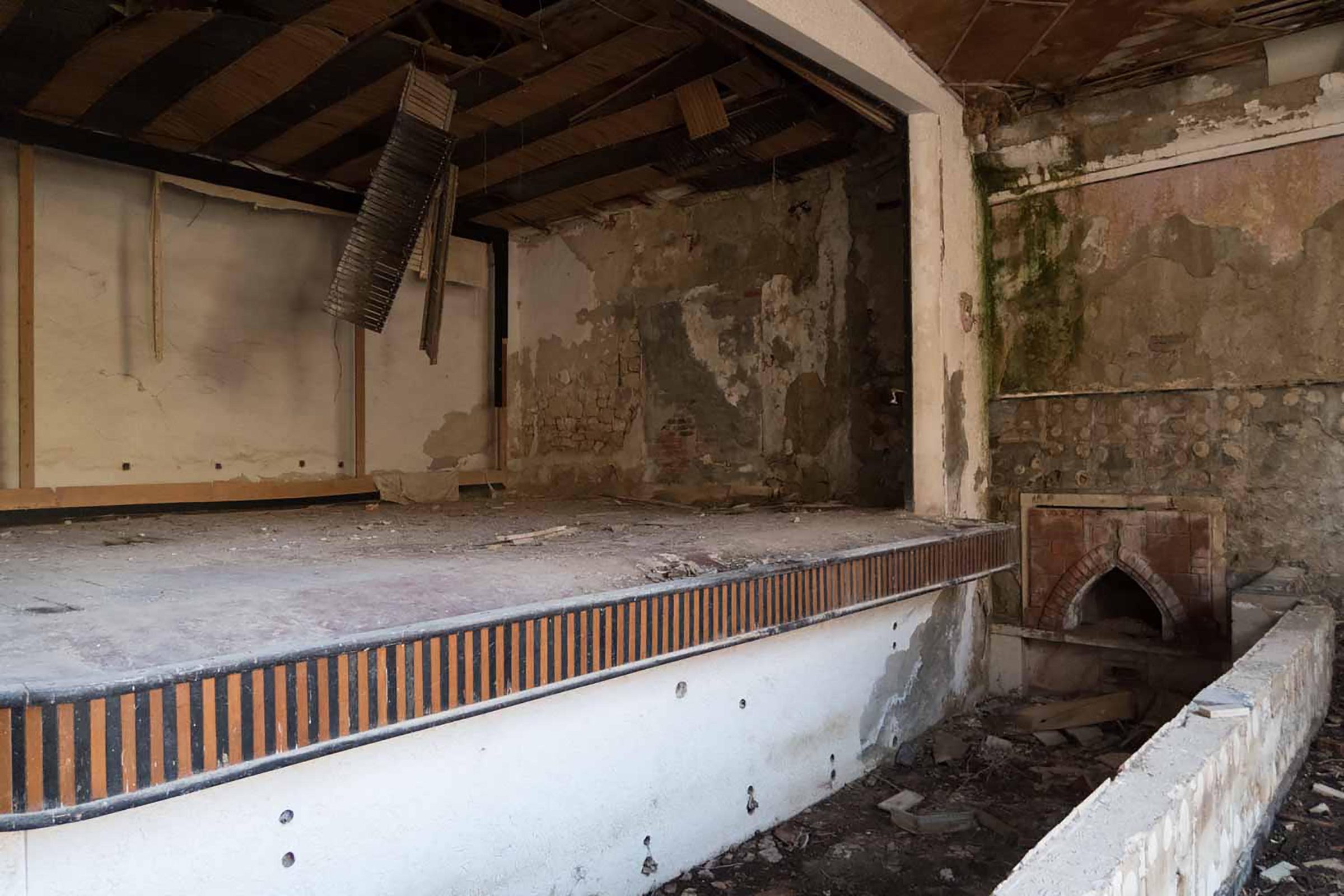
From the founding of the camp in 1949 the system functioned as a double pyramid of power. Alongside the visible, “conventional” administration there was also an invisible level that made the key decisions. The rules were set by the UDBAUDBAState Security Administration (Uprava državne bezbednosti) – the Yugoslav secret political police responsible for the surveillance and persecution of real or alleged opponents of the regime., and the camp enforced them “from within”, through coercion and a hierarchy among the detainees.
This internal system was an original UDB “invention” in methods of camp administration. Self-administered re-education meant that a prisoner proved his own “re-education” by taking part in the re-education of others, through pressure, violence, blackmail, intimidation and humiliation.
Historians of psychiatry have described it as a “unique culture of violence”, not encountered in other camps and repressive systems.
Such a system quickly destroyed solidarity among the prisoners and produced an endless cycle of violence, in both the men’s and the women’s camp.
The invisible, decisive power: the UDBA
Behind the formal administration stood the UDBA, through operatives responsible for interrogation, classification, “re-education” and surveillance. In practice the UDBA decided who was “revised” and who remained part of the “gang”; who joined the “aktiv”, who moved into the “collective” and who fell into boycott.
The UDBA also directed the punishment regime: who went to harder labour, to isolation or to be beaten, and under what conditions. Without its approval, leaving the system was in practice hardly conceivable.
Prisoner self-administration: governance under coercion
In the barracks and at the worksites a prisoner self-administration was established: a network of functions performed by the prisoners themselves (room elders, brigade leaders, members of the “aktiv” and others). Formally it looked like “self-management”, but without any real autonomy.
The key logic was that of blackmail: a prisoner could obtain a better position only by enforcing the system on others. Anyone who did “not fit in” could be removed and returned to boycott.
There were also police in the camp, and the JNAJNAYugoslav People’s Army (Jugoslavenska narodna armija) – the official name of the Yugoslav armed forces. guarded the island, but they took part in the prisoners’ daily life to a lesser extent.
Terms of the hierarchy: degrees of coercion and consent
The internal order was built around one’s “political stance”. These terms were not neutral labels but practical steps through which life in the camp was managed.
The “gang” and boycottBoycottThe bottom of the camp hierarchy and a punishment at the same time: the boycotted wore markings, no one was allowed to speak to them, and they could be beaten with impunity. denote the bottom of the hierarchy: those who had not “revised”. Total terror was inflicted on the boycotted: no one was allowed to address them, help them or sit with them. They were given the hardest work and were invariably subjected to abuse. Boycott was at once a punishment and a means of coercion: the way out was tied to accepting the “position”.
The “collective” was the stage after boycott and a public admission of “guilt”. In the “collective” violence was often less overt, but surveillance continued. The work was lighter and conditions more stable, limited privileges were possible (parcels, correspondence), and participation in maintaining order was expected.
The revised were those who, after interrogation, written records and public statements, were deemed to have accepted the official policy of the KPJKPJCommunist Party of Yugoslavia (Komunistička partija Jugoslavije). and renounced the IB“IB-ist” guiltReal or alleged membership of the pro-Cominform current, i.e. support for the Cominform Resolution or opposition to Tito’s regime, for which a person was labelled an IB-ist (“ibeovac”).. They typically received better accommodation and lighter work, could advance, and improved their chances of entering the “collective” and being released.
The “aktiv”AktivThe political core of the prisoners’ self-administration: prisoners who had revised their stance, led meetings, directed attacks on the “unreliable” and reported to the UDBA. was the political core of the camp: revised prisoners who took on “political work” and became the key link in the self-administration. The “aktiv” led political meetings, directed criticism and attacks against the “unreliable”, proposed who should leave boycott and who should return “to the bottom”, and wrote and passed on reports to the UDBA. It was the UDBA’s extended arm, with real influence over the fates of others.
What “administration” meant in the camp
On Goli otok the word “administration” in practice covered two levels.
The first was the prisoners’ administration – self-administration in the barracks and brigades: the room elder (order and the “political atmosphere”), the brigade leader and work supervisors (quotas and discipline), members of the “aktiv” (political surveillance and reporting), and those in charge of food and the allocation of work. Candidacies were approved by the UDBA, and responsibility for violence (gauntlets, humiliations, extorting a “position”) was often shifted onto the prisoners.
The second was the administration of the UDBA and the official apparatus: UDBA operatives, together with the commandant, the guards and the administrative staff, decided on internment and the length of stay, on classification (who was “hard”, who was “on the way to revising”, who could join the “aktiv”), on the regime (boycott, parcels, correspondence, transfers) and on release.
The interrogator (isljednik / isljednica)
The interrogatorInterrogator (isljednik)The UDBA’s political investigator in the camp. Through interviews and written records he determined a prisoner’s “guilt” and monitored their “progress”. was the UDBA’s political investigator. Through interviews, written records and “supplements”, he linked the camp to the state security apparatus: he steered classification (revised / boycott / aktiv), defined “guilt” and monitored “progress”. Almost every prisoner went through at least one interview with an interrogator during their stay, and the tone and pressure of the interrogator could change depending on the wider political circumstances.
Glossary
- UDBA
- State Security Administration (Uprava državne bezbednosti) – the Yugoslav secret political police responsible for the surveillance and persecution of real or alleged opponents of the regime.
- JNA
- Yugoslav People’s Army (Jugoslavenska narodna armija) – the official name of the Yugoslav armed forces.
- Boycott
- The bottom of the camp hierarchy and a punishment at the same time: the boycotted wore markings, no one was allowed to speak to them, and they could be beaten with impunity.
- KPJ
- Communist Party of Yugoslavia (Komunistička partija Jugoslavije).
- “IB-ist” guilt
- Real or alleged membership of the pro-Cominform current, i.e. support for the Cominform Resolution or opposition to Tito’s regime, for which a person was labelled an IB-ist (“ibeovac”).
- Aktiv
- The political core of the prisoners’ self-administration: prisoners who had revised their stance, led meetings, directed attacks on the “unreliable” and reported to the UDBA.
- Interrogator (isljednik)
- The UDBA’s political investigator in the camp. Through interviews and written records he determined a prisoner’s “guilt” and monitored their “progress”.