

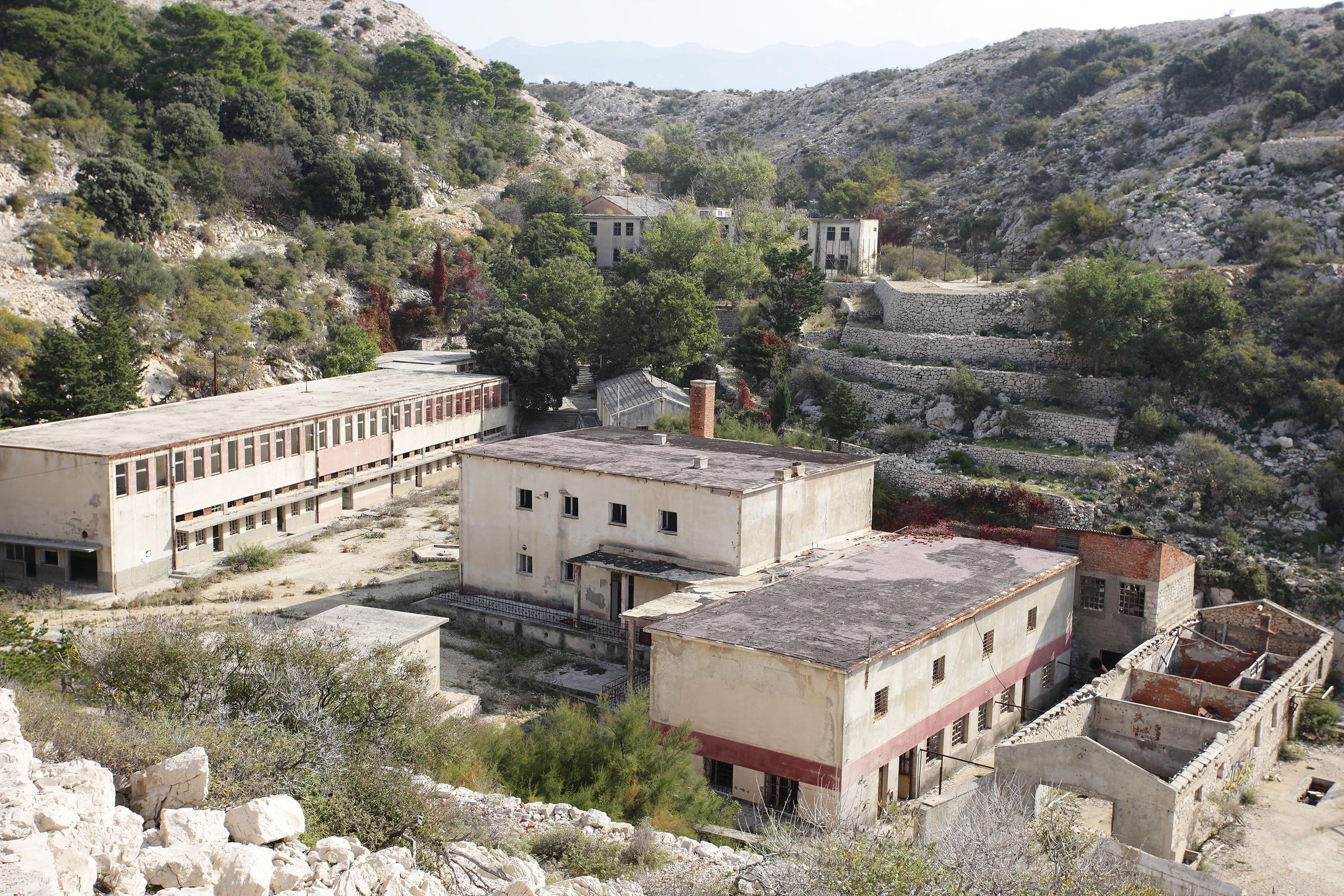
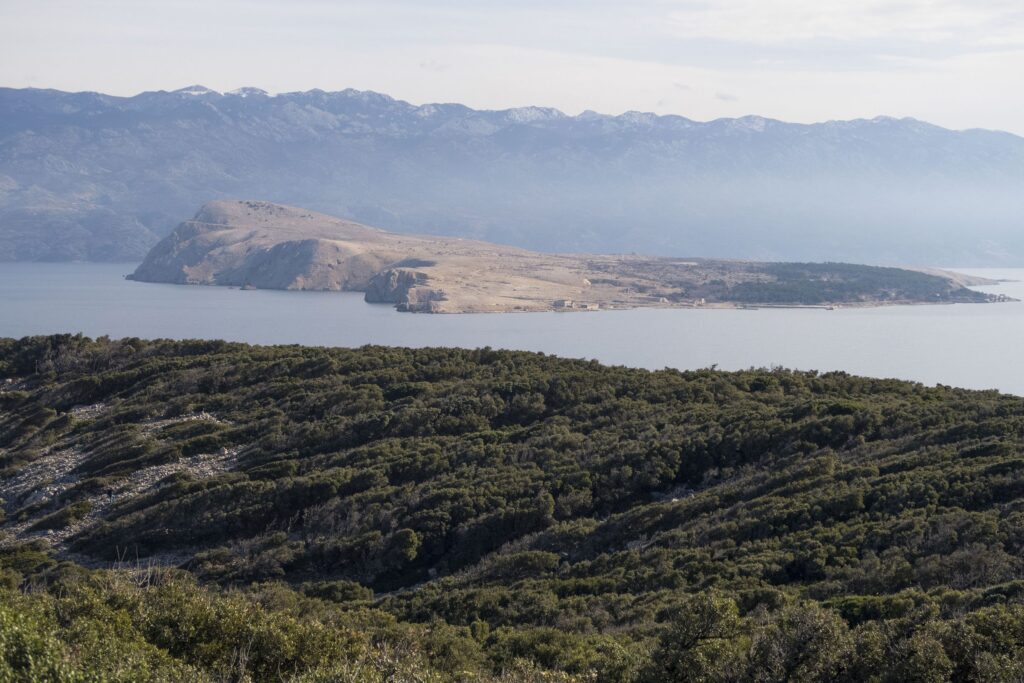
From 1949 to 1956 transports of men arrived on the island from all parts of the Yugoslavia of the time. The camp was a closed system of isolation under the control of the security apparatus, with clearly defined rules of conduct, movement and daily life.
Most detainees came from Serbia and Montenegro, followed by Croatia and then Slovenia and the other republics. The men’s camp was the largest and longest-running camp unit of the Cominform period (1949–1956).
The rhythm of the camp and the organisation of daily life
Conditions changed over the years and between sections, but the basic rhythm of the day was similar. The day began with an early wake-up and a head count, continued with lining up and assignment to work groups, and ended with evening duties in the pavilions and night-time rest under constant surveillance.
- Early wake-up and head count
- Lining up and assignment to work groups
- Forced labourQuarrying, construction, carrying loads – under supervision and with checks on output.
- Evening duties in the pavilionsConferences, the “political hour”.
- Night-time rest under constant surveillance
Detainees were assigned to work brigades, sections and pavilions. This arrangement made it possible to carry out daily duties and to control the internal life of the camp.
The camp functioned as a closed system in which rules and assessments of behaviour directly affected the position of the prisoners and the conditions of their stay.
Re-education on Goli otok: violence as a method of loyalty
Political “re-education” on Goli otok was not an educational process but a system of controlled violence. A prisoner’s position, length of stay, type of work and chances of survival often depended on their readiness to publicly renounce their “IB-ist” guilt and to demonstrate loyalty to the party leadership.
The mechanisms included physical torture, ritual humiliation, imposed collective aggression, a strictly supervised hierarchy among prisoners, and working and climatic conditions as a permanent form of punishment. The system was set up so that the violence appeared to be an “internal” matter of the collective, while real control and direction were maintained through the power structure.
Forced labour as an integral part of the regime
Forced labour was a constant obligation. It included heavy physical work and tasks related to the maintenance and running of the camp system, as well as work in quarries in all the camps of the Goli otok network, some of which were located on the mainland.
Through heavy forced prison labour, the quarry on Goli otok produced large quantities of crushed stone, which supplied public buildings, enterprises and trades outside the camp, at both republic and international level. This means that the UDBAUDBAState Security Administration (Uprava državne bezbednosti) – the Yugoslav secret political police responsible for the surveillance and persecution of real or alleged opponents of the regime., in addition to defining stonework as a “re-educational” form of forced labour, was at the same time making a profit – both in dinars, the currency of the former Yugoslavia, and in foreign currency.
Labour was at the same time part of discipline: through duties, pace of work and checks on output, control over daily life was maintained.
The daily life of the camp was also changed by the Bosnian group – a group of detainees who arrived on Goli otok in the second half of July 1949, about a month after the first transports. Sources state that it was assembled in CEZABiH (the Central Prison of Bosnia and Herzegovina) and used as an UDBA mechanism for putting pressure on others, along with the introduction of new methods of torture.
The mechanisms of political “re-education”, hierarchy and violence are examined in more detail in the chapter Re-education on Goli Otok: Violence as a Method of Loyalty.
Expansion of the system and closure of the camp
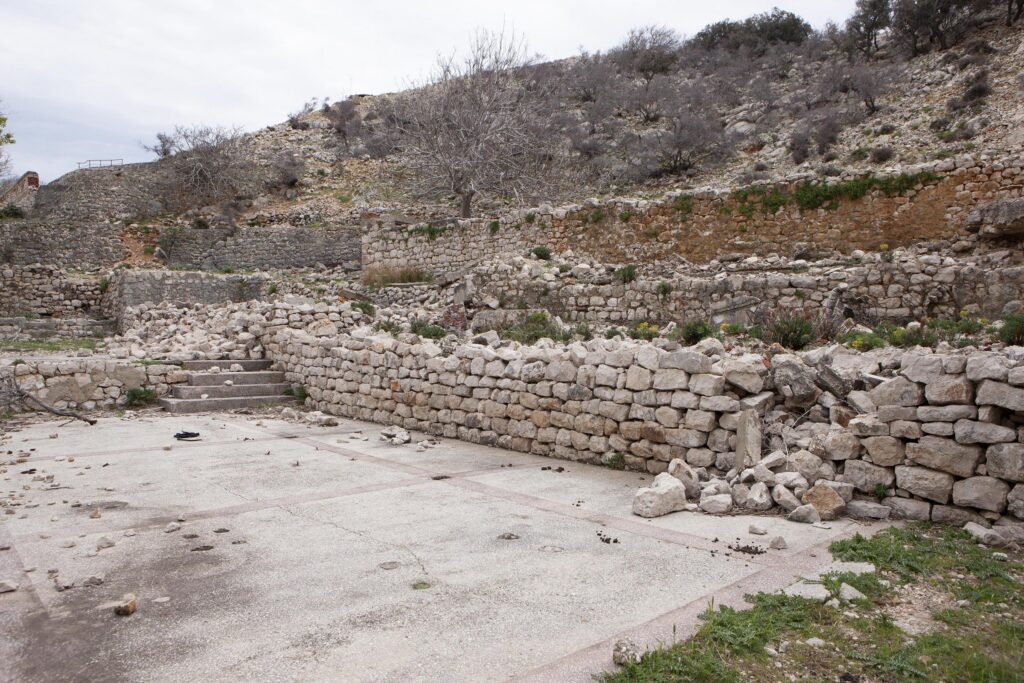
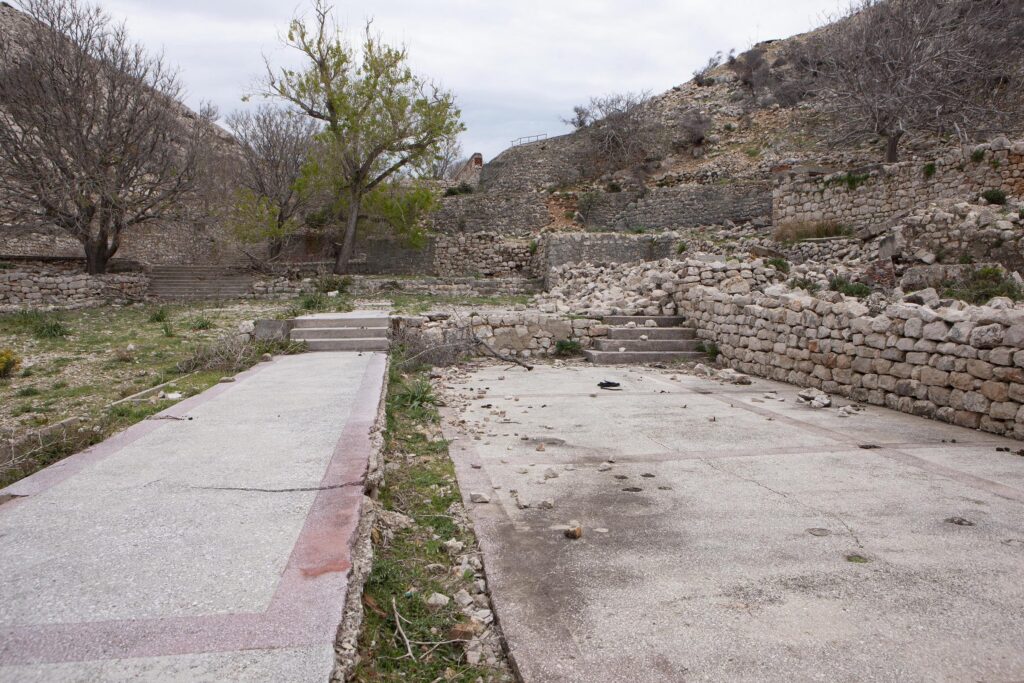
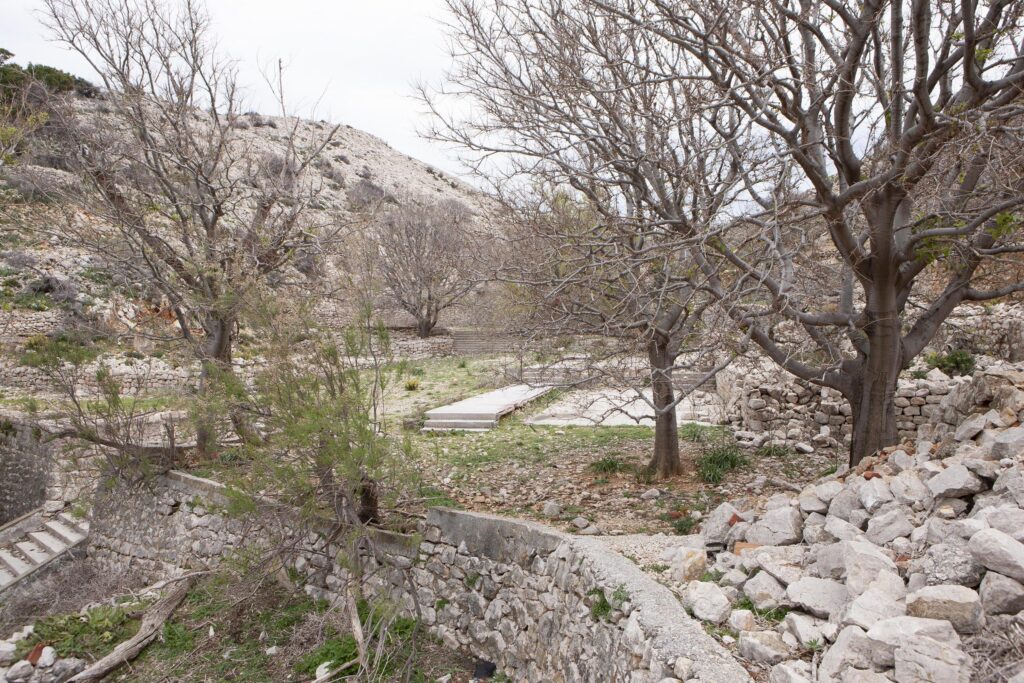
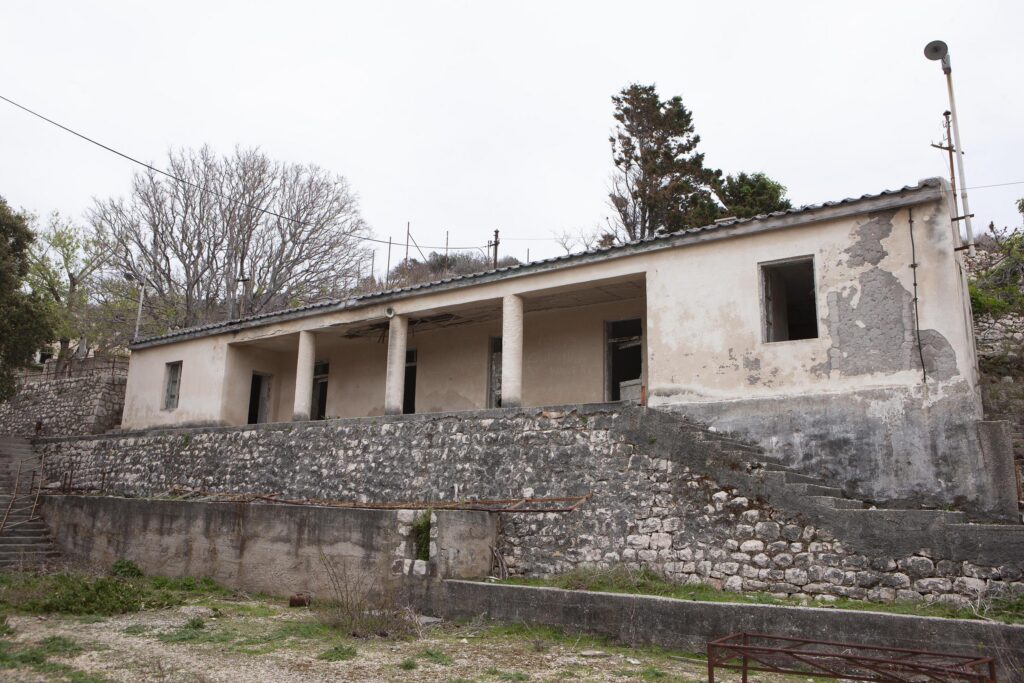
As the number of internees grew, the system expanded and was organised into several zones and worksites. Alongside the main parts of the camp there were separate places of work and residence, sometimes with a special regime, but within the same camp framework.
After 1953, with changes in relations between Yugoslavia and the USSR, the number of new arrests fell, and some of the detainees were released or transferred. Individual parts of the system were gradually closed or repurposed, and the regime increasingly approached the model of a prison holding fewer politically designated prisoners.
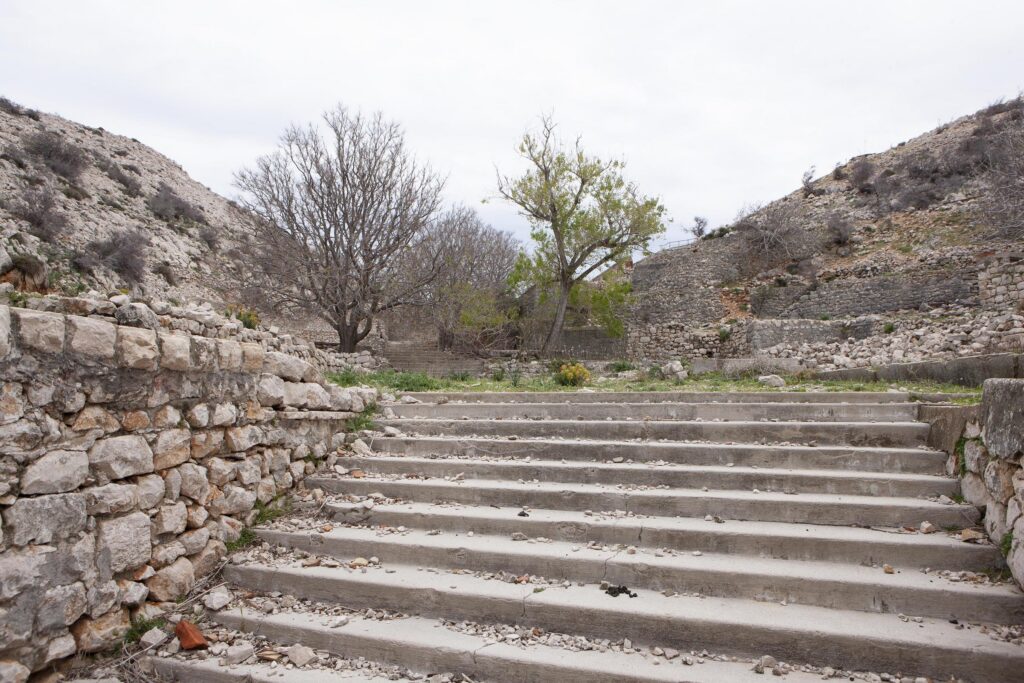
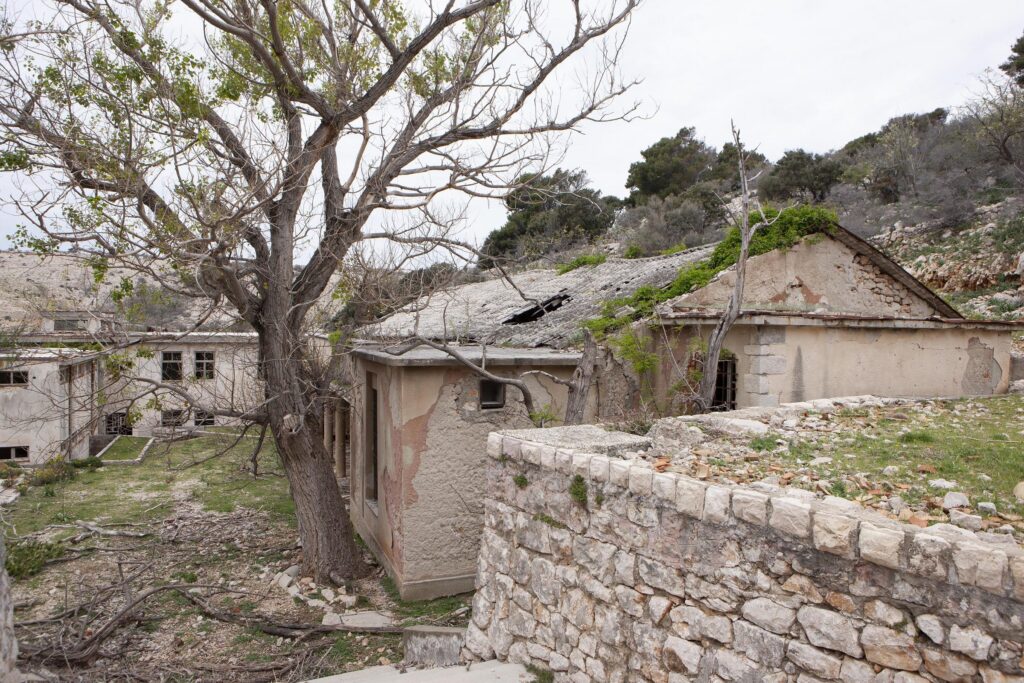
Photographs
Glossary
- UDBA
- State Security Administration (Uprava državne bezbednosti) – the Yugoslav secret political police responsible for the surveillance and persecution of real or alleged opponents of the regime.