

The enterprise as a front and an instrument of management
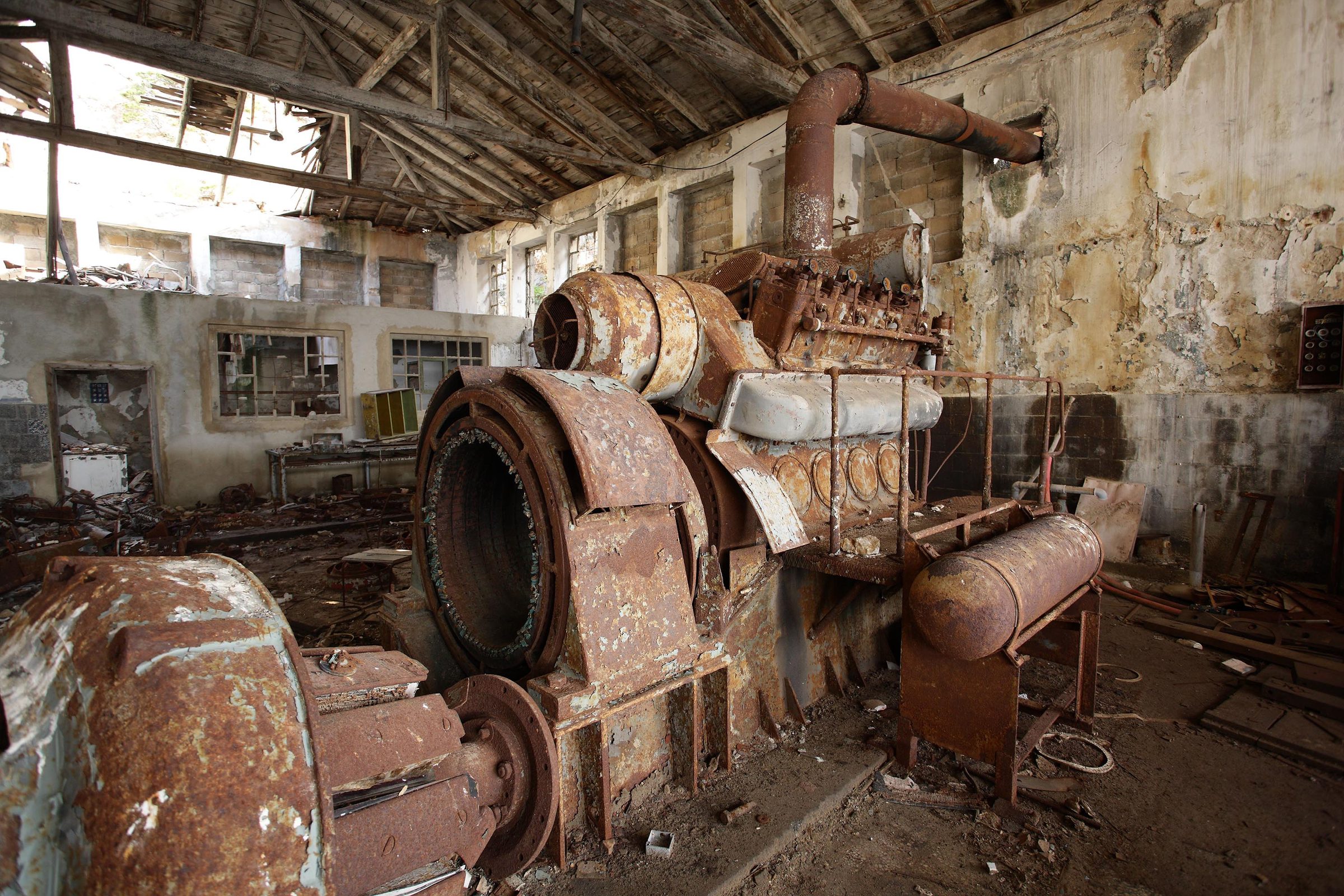
Many products made on Goli otok and Sveti Grgur were sold outside the camp, often in foreign countries as well. The products of Goli otok were presented as products of the Mermer enterprise.
From the outside “Mermer” operated as an ordinary enterprise, but all its products were made through heavy physical labour whose main purpose, besides profit, was the torment of the prisoners. Within it operated a Technical Bureau which designed and coordinated the construction of camp buildings (the administrative building of “Big Wire”, the pavilions and other structures).
The structure of the enterprise, which did business with other commercial entities, was gradually expanded and formalised: Mermer (a smaller enterprise with limited production) → Kombinat Mermer (several plants and a larger volume of business) → Kombinat Velebit (reorganised production with an emphasis on wood and stone plants and wider distribution, including sales outside Yugoslavia). The products were sold both on the domestic market and abroad.
Mermer’s earnings ended up partly as an internal fund of the security apparatus and partly in the state budget, while the prisoners received no payment for their work.
From an improvised camp to an “economic system” (1949–1956)
In the first phase (1949–1950) work was directed at building the camp’s infrastructure: unloading materials, building barracks, cisterns and landing stages. In this phase work was devoted mostly to constructing the camp infrastructure.
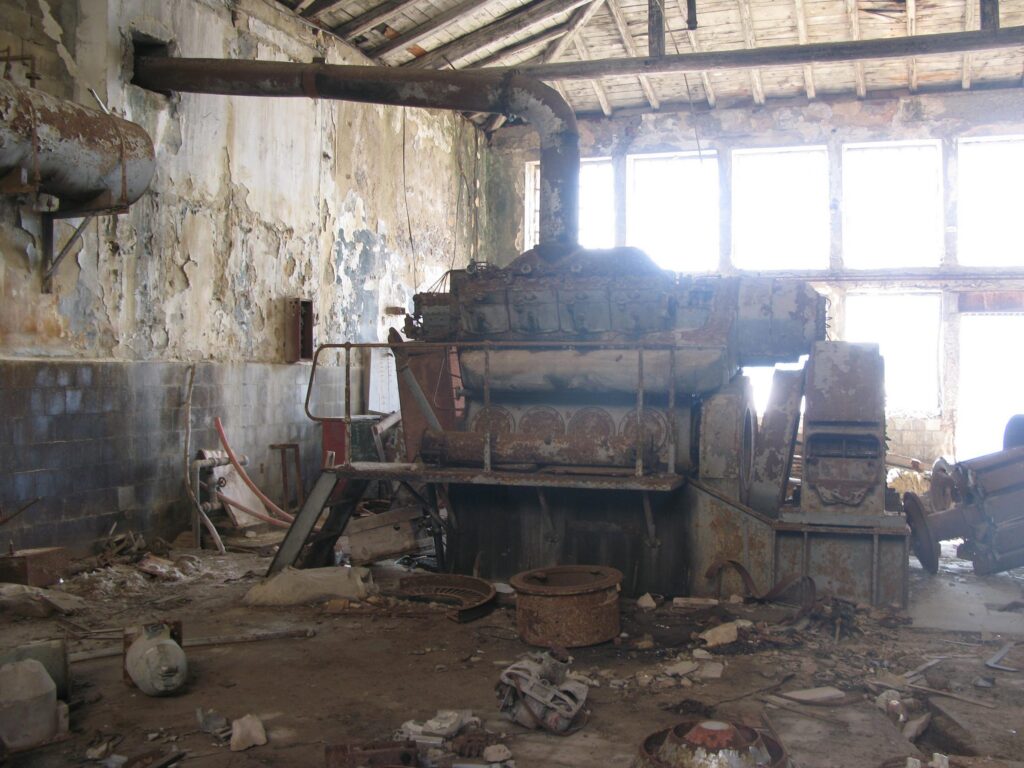
In the second phase (1950–1953), with the move to “Big Wire”, work was reorganised on an “industrial” basis. Three main branches were established: woodworking, stoneworking (the quarry, terrazzo), and a metalworking and small shipbuilding workshop. At the same time the construction of pavilions, administrative buildings, a hospital and storehouses continued – formally as “work for Mermer”.
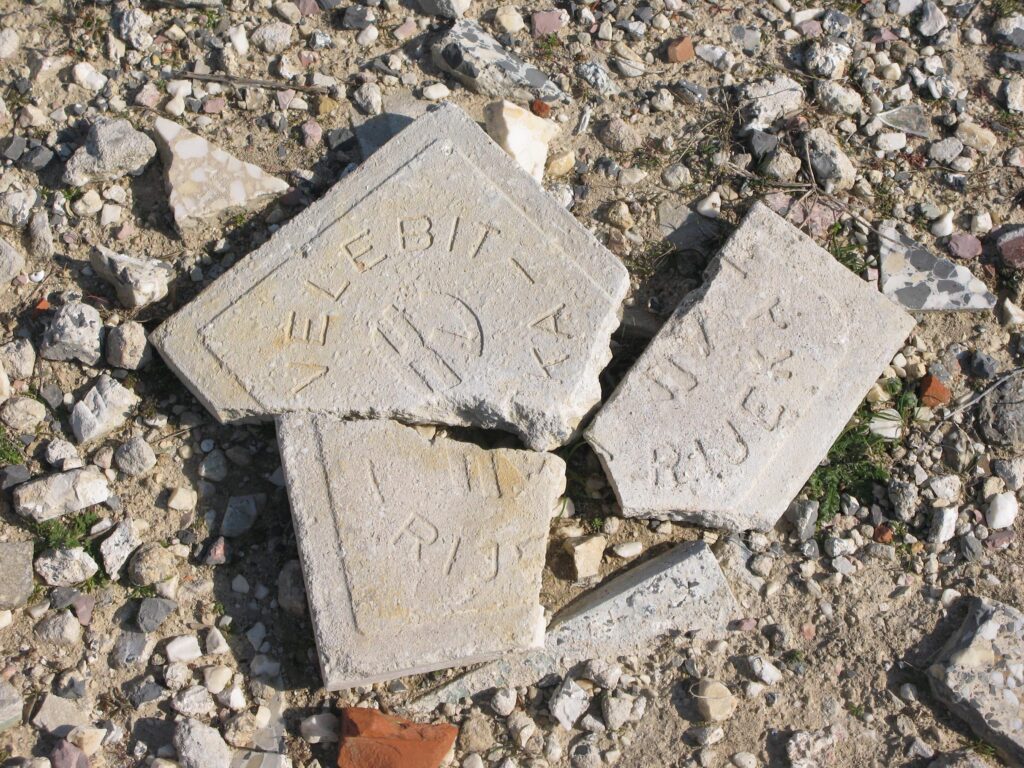
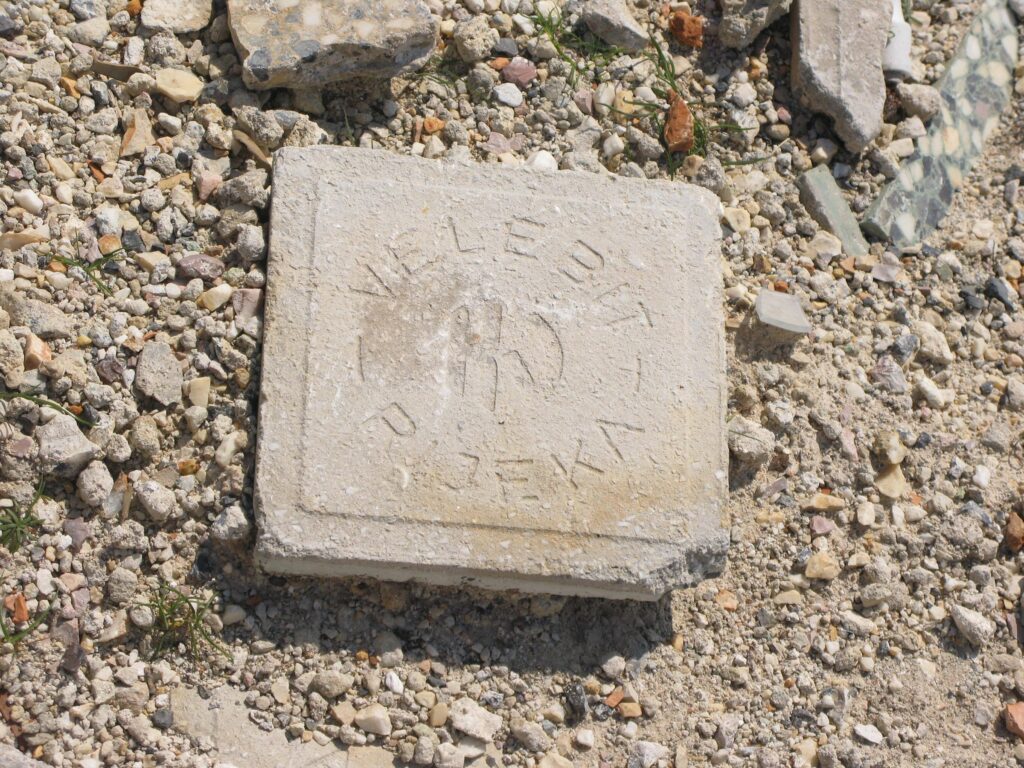
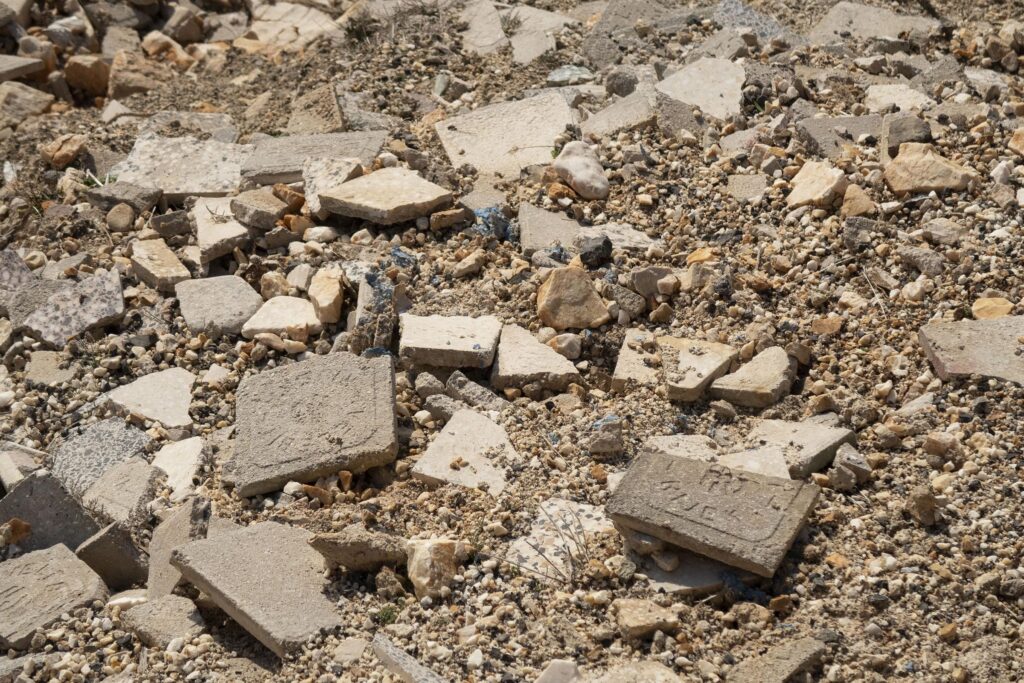
In the third phase (1953–1956) production entered the stage of series production. Terrazzo tiles were produced in large series and distributed throughout Yugoslavia. In parallel a sawmill was developed, and logging on Velebit and transport to the coast and to Rijeka were organised – work extended beyond the island but remained tied to the camp enterprise and the supervision of the services.
The phases are explained here using the largest camp, the men’s camp. The women’s camp went through similar phases, although the products differed.
Three types of prisoner labour
Labour in the Mermer/Velebit system can be described in three basic categories.
1) Constructive labour (building the camp). Building pavilions, administrative buildings, hospitals, cisterns and landing stages (camp infrastructure).
2) Punitive “re-educational” labour (discipline and exhaustion). Pointless tasks (taking stone out of the sea and then putting it back into the sea), the hardest work in the quarry, extracting sand from the sea, and work in the bora and exposed conditions (for the “punished”). Afforestation of Goli otok, with prisoners using their bodies to shield saplings from the bora or to provide shade during the summer heat. The purpose was primarily disciplinary: control and breaking people through exertion, exposure and humiliation.
3) Profit-making labour (workshops and production for the market). Work in the sawmill and wood processing, making terrazzo tiles and decorative stone objects, work in the metalworking plant and work in the small shipyard. Besides the workshops, some prisoners worked in administration (bookkeeping). Work in certain workshops and in administration was considered privileged, while most remained in the hardest jobs in the quarry and on the building sites.
Terrazzo tiles
Mermer/Velebit and the UDBA’s “invisible budget”
Complete annual financial statements for the period 1949–1956 have not survived. Part of the business documentation was later destroyed, particularly after the removal of Aleksandar RankovićAleksandar Ranković (1909–1983)Yugoslav communist politician, long-time head of the security apparatus (the UDBA), a close associate of Tito and Vice-President of the SFRJ from 1963 to 1966. in 1966, which makes precise calculations difficult.
The literature states that the UDBAUDBAState Security Administration (Uprava državne bezbednosti) – the Yugoslav secret political police responsible for the surveillance and persecution of real or alleged opponents of the regime. ran the enterprise and its key internal services, and that revenue from the sale of timber, terrazzo and other products served in part as an off-budget fund for the operations and needs of the security apparatus. After 1966 a more intensive destruction of financial records is mentioned, which is interpreted as an attempt to erase the traces of the scale of exploitation.
Because of this state of the sources we can today describe the mechanism relatively clearly, but it is difficult to reconstruct the exact volume of production and the profits made.
The Brioni Plenum (1 July 1966) and the absence of accountability
The Brioni Plenum (the Fourth Plenum of the Central Committee of the League of Communists of Yugoslavia – CK SKJ) was held on 1 July 1966 on Brijuni. It was a session of the highest party officials at which decisions were taken with a direct effect on the state apparatus. There, under the chairmanship of Josip Broz Tito, the question of the work of the security services and the so-called “wiretapping affairThe wiretapping affair (1966)The accusation that the security apparatus had illegally wiretapped Tito and the state leadership; it served as the key pretext for Aleksandar Ranković’s removal at the Brioni Plenum. The suspicions were never fully proven in court in public proceedings.” was raised, after which Aleksandar Ranković was removed and the power of the State Security Service (SDB; formerly the UDBA – see names of the UDBANames of the UDBAIn 1946 OZNA was reorganised as the UDB/UDBA (Uprava državne bezbednosti, colloquially “Udba”); after 1966 the name changed to SDB/SDS (State Security Service).) was formally curtailed.
Some accounts and interpretations mention that within this framework questions of the financial power of the security apparatus were also touched upon, including the earnings connected with Goli otok and the funds generated by forced labour, along with suspicions of malfeasance.
At the same time, the absence of key consequences is emphasised: no court proceedings were brought against Ranković, the camp system was not systematically investigated, and the economic dimension of forced labour remained outside political and judicial focus. A further problem is the claim that it was precisely then that the destruction of financial documentation intensified, which today makes it difficult to reconstruct the financial flows and the scale of the “camp economy”.
Why is it important to talk about profit today?
The reconstruction of the “Mermer” enterprise is important because it shows the dual function of the camp: political repression and planned economic exploitation. It also reveals how the security apparatus was able to create extraordinary funds outside the usual oversight.
When we speak of profit, we are not speaking only of figures, but of a system in which the forced labour of political prisoners was turned into gain for institutions – without payment and without reparation.
Glossary
- Aleksandar Ranković (1909–1983)
- Yugoslav communist politician, long-time head of the security apparatus (the UDBA), a close associate of Tito and Vice-President of the SFRJ from 1963 to 1966.
- UDBA
- State Security Administration (Uprava državne bezbednosti) – the Yugoslav secret political police responsible for the surveillance and persecution of real or alleged opponents of the regime.
- The wiretapping affair (1966)
- The accusation that the security apparatus had illegally wiretapped Tito and the state leadership; it served as the key pretext for Aleksandar Ranković’s removal at the Brioni Plenum. The suspicions were never fully proven in court in public proceedings.
- Names of the UDBA
- In 1946 OZNA was reorganised as the UDB/UDBA (Uprava državne bezbednosti, colloquially “Udba”); after 1966 the name changed to SDB/SDS (State Security Service).