

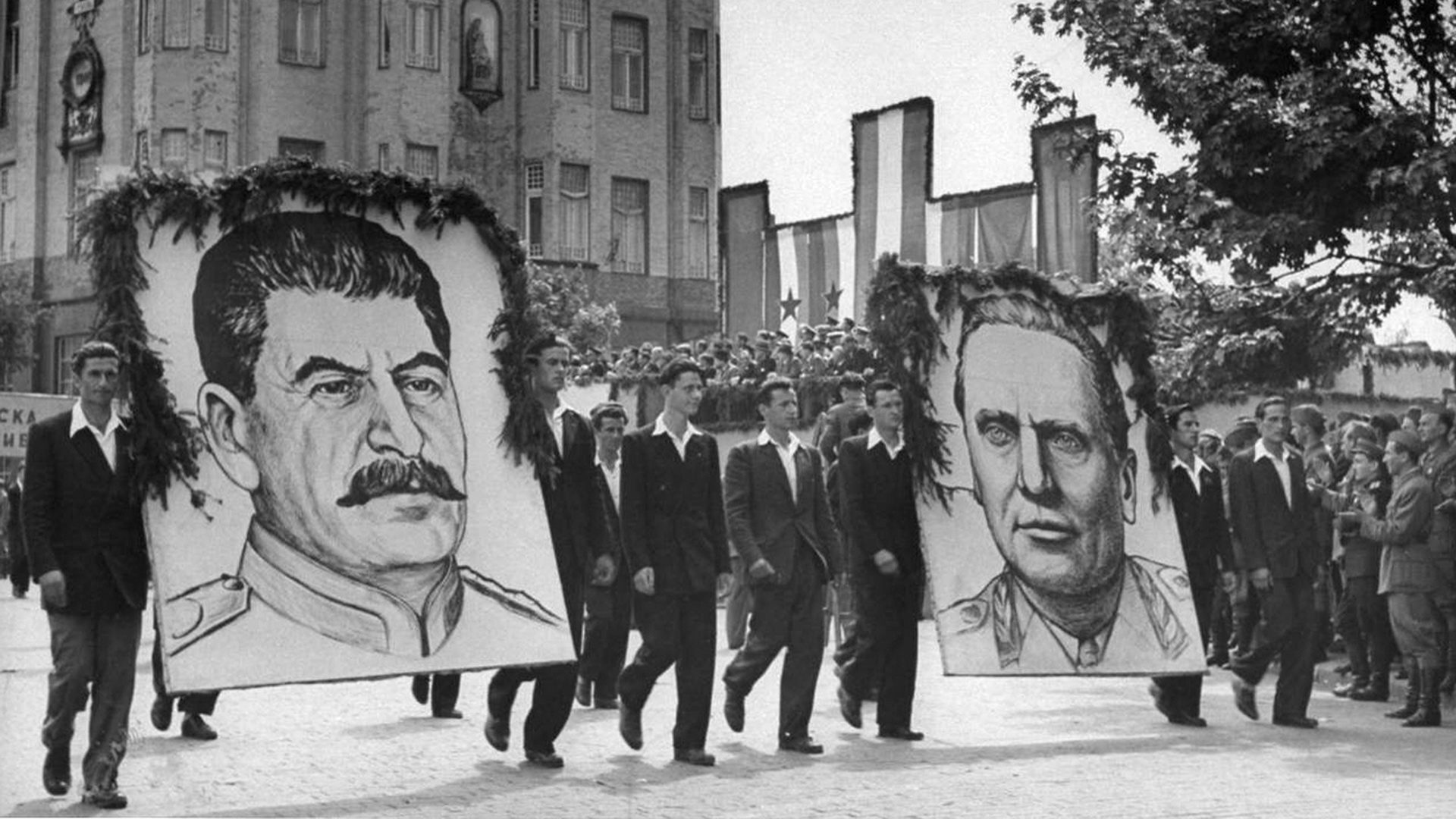
Context: Yugoslavia after the Second World War
After 1945 a one-party system was established in Yugoslavia, in which the Communist Party of Yugoslavia (KPJKPJCommunist Party of Yugoslavia (Komunistička partija Jugoslavije).) took the leading role in state administration, the economy and public life.
The reconstruction of the country, nationalisation and the planned economy went hand in hand with tightening political control. OZNAOZNADepartment for the Protection of the People (Odjeljenje za zaštitu naroda) – the Yugoslav security and intelligence service founded during the Second World War, the predecessor of the UDBA., the wartime and post-war security service, gradually grew into the UDBAUDBAState Security Administration (Uprava državne bezbednosti) – the Yugoslav secret political police responsible for the surveillance and persecution of real or alleged opponents of the regime., a permanent secret police, and from 1946 the authorities increasingly restricted public and political dissent.
In such a system sanctions were often imposed by administrative decision, without court proceedings, especially at times when the authorities feared unrest and loss of control.
The Cominform and the Cominform Resolution (1948)
The Cominform (in Yugoslavia often also called the Informbiro) was founded in 1947 as an international organisation for coordinating the activities of communist parties. It brought together the parties of the Soviet Union (USSR), Yugoslavia, Bulgaria, Romania, Hungary, Poland, Czechoslovakia, France and Italy. Its first session after its founding was held in Belgrade.
The Cominform Resolution of 28 June 1948 publicly condemned the leadership of the KPJ and marked the beginning of Yugoslavia’s split with the USSR and its expulsion from the Cominform. The Albanian communist party, although not a member of the Cominform, supported the condemnation of Yugoslavia.
What the Resolution meant within Yugoslavia
The Cominform Resolution accused the KPJ leadership of deviating from the “correct line” of communism and called on Party members to remove the Yugoslav party leadership.
The Resolution made public and further intensified the conflict with the USSR, which had begun even before it was adopted. Within the country it opened the way to political persecution, as any disagreement by citizens with state policy was increasingly interpreted as disloyalty to Yugoslavia.
Behind this policy lay the fear that the USSR might start a war against Yugoslavia, either directly or through its allies, the other members of the Cominform.
Relations between Yugoslavia and the Soviet Union before the split
After the Second World War Yugoslavia largely modelled itself on the Soviet Union and cooperated with the communist parties gathered in the Cominform, while at the same time seeking to make its own decisions independently.
As this striving for independence grew stronger, so did tensions – which gradually led to open conflict in 1948.
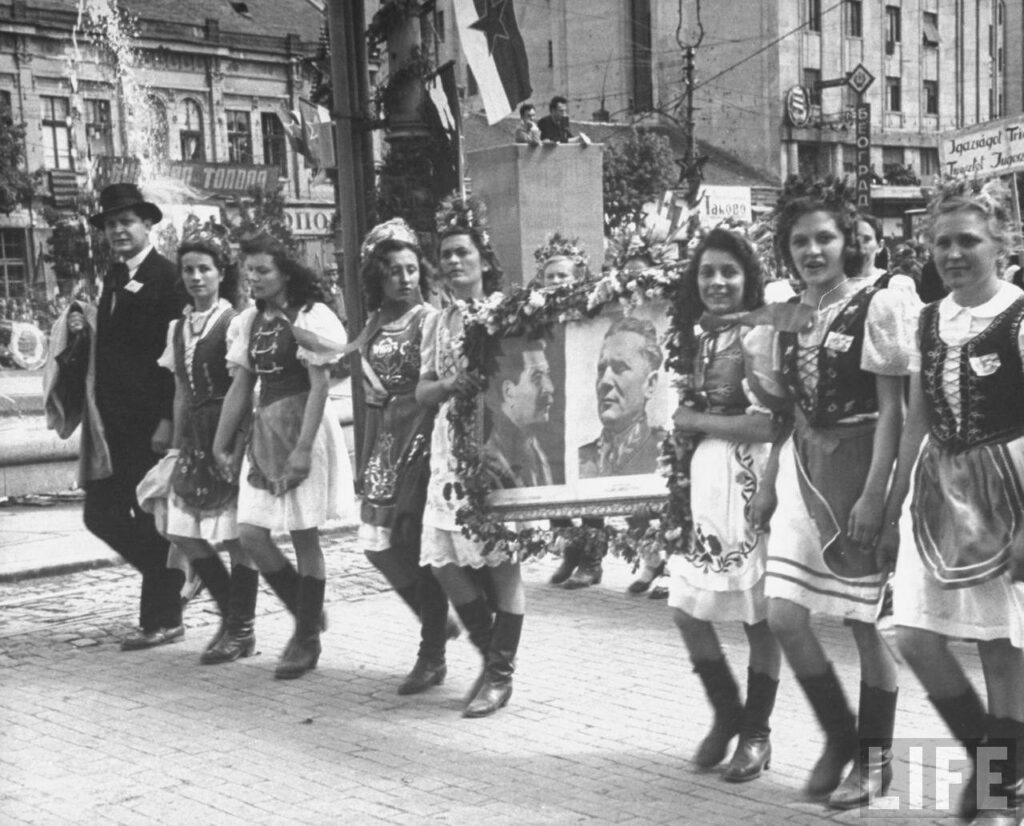
Consequences of the split: isolation and internal repression
After the Resolution, Yugoslavia found itself isolated among communist states and parties. The authorities tightened border control, the political leadership felt threatened, and there was growing insistence on complete political unity among citizens.
In this atmosphere waves of arrests and expulsions from the Party began – both of members who openly opposed the break with the USSR and of those merely suspected of holding such views.
The UDBA soon began detaining a growing number of people, many of whom ended up in custody or in forced labour. Estimates of how many people were affected vary from source to source.
The logic of “loyalty”
The split created an atmosphere in which the individual was required to condemn the Cominform Resolution clearly and publicly.
Any criticism of the regime, any joke, even silence at meetings could be interpreted as a sign of unreliability.
Loyalty became the measure of political suitability, with consequences for one’s job, position and freedom.
The road to the camp system (1949)
Arrests of people labelled “Cominformists” began as early as 1948, and the prisoners were initially held in existing prisons. As the conflict with the USSR dragged on and the number of detainees grew, several camps were secretly opened in July 1949, such as the one on Goli otok in the Adriatic Sea and at Ramski rit near the Romanian border.
- 1945Establishment of the one-party order
- 1946Strengthening of the state apparatus and security services
- 1947Founding of the Cominform
- 1948The Cominform Resolution and the condemnation of Yugoslavia
- 1949Opening of the camp on Goli otok
- 1950–1953The Korean WarKorean WarThe 1950–1953 conflict in which North Korea, backed by China, fought against South Korea, which was supported by United Nations forces led by the USA. For Yugoslavia, which had already broken away from the USSR, the war further deepened Cold War divisions and accelerated its turn towards a policy of non-alignment. and intensified internal surveillance in Yugoslavia
- 1953Death of Joseph StalinJoseph Vissarionovich StalinSoviet communist leader and dictator who ruled the Soviet Union from 1924 (after Lenin’s death) until his own death in 1953. and a change in the international climate
- 1955Beginning of the restoration of relations between Yugoslavia and the Soviet Union
- 1956Goli otok ceases to be a Cominform camp and becomes a prison for criminally prosecuted persons
- 1958Visit by Soviet Premier Nikita Khrushchev and normalisation of relations
Glossary
- KPJ
- Communist Party of Yugoslavia (Komunistička partija Jugoslavije).
- OZNA
- Department for the Protection of the People (Odjeljenje za zaštitu naroda) – the Yugoslav security and intelligence service founded during the Second World War, the predecessor of the UDBA.
- UDBA
- State Security Administration (Uprava državne bezbednosti) – the Yugoslav secret political police responsible for the surveillance and persecution of real or alleged opponents of the regime.
- Korean War
- The 1950–1953 conflict in which North Korea, backed by China, fought against South Korea, which was supported by United Nations forces led by the USA. For Yugoslavia, which had already broken away from the USSR, the war further deepened Cold War divisions and accelerated its turn towards a policy of non-alignment.
- Joseph Vissarionovich Stalin
- Soviet communist leader and dictator who ruled the Soviet Union from 1924 (after Lenin’s death) until his own death in 1953.