

Political framework (1948–1949)
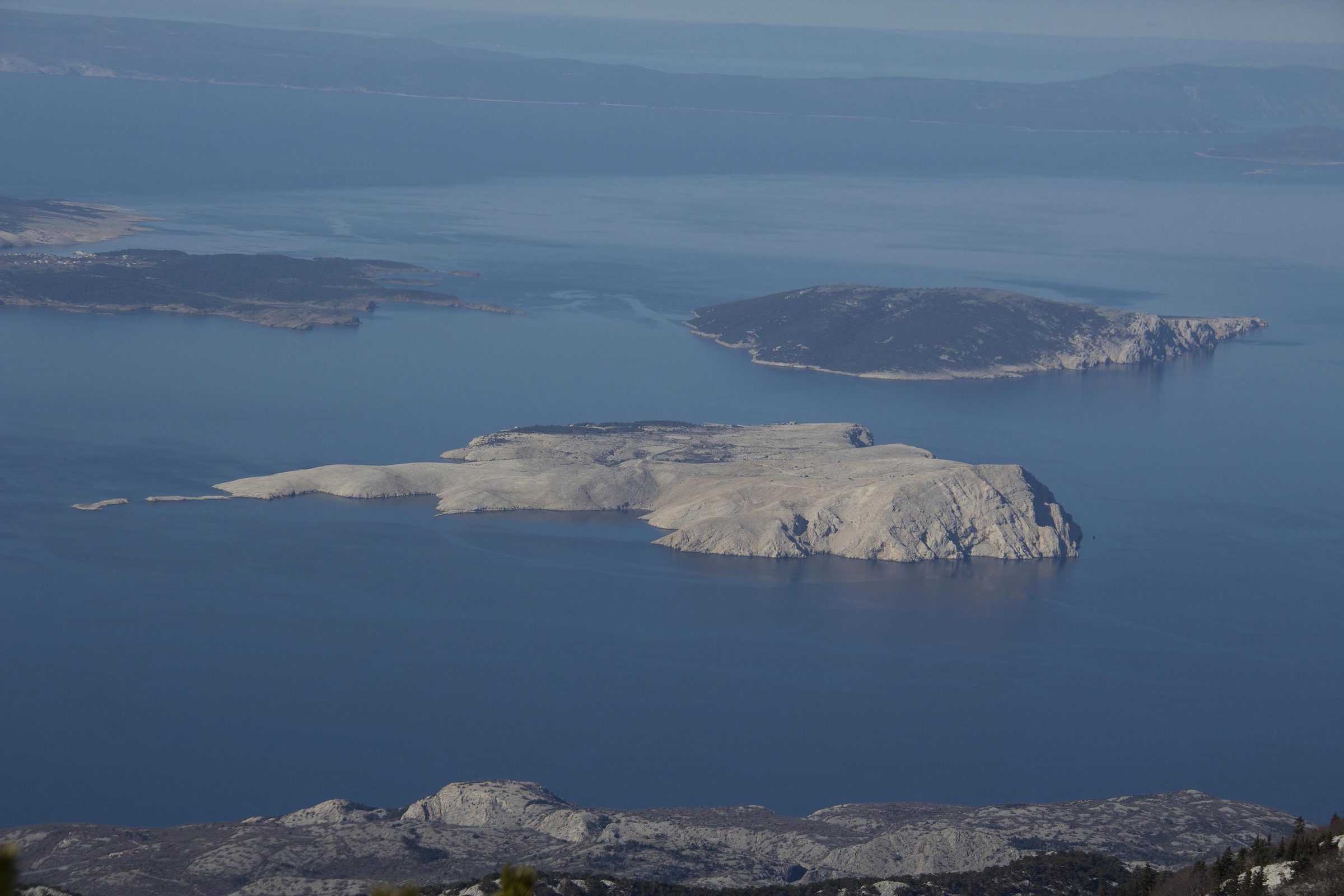
After the split with the Cominform (Informbiro)InformbiroColloquial name for the Cominform – an international organisation of communist parties founded in 1947 for political coordination under the leadership of the USSR., the security apparatus chose Goli otok as the site of the main labour camp: uninhabited, away from the main shipping and transport routes, with natural barriers that made escape difficult but allowed reception and supply by sea.
Goli otok proved a location that suited the UDBAUDBAState Security Administration (Uprava državne bezbednosti) – the Yugoslav secret political police responsible for the surveillance and persecution of real or alleged opponents of the regime., as it combined extreme isolation with the possibility of constant surveillance and regular supply by sea.
The site selection process (spring 1949)
In early 1949 field teams systematically toured the northern Adriatic, particularly the area between Rab and Krk.
Goli otok stood out because it met the security parameters most consistently: it was completely uninhabited, had coves suitable for discreet landing and supply, terrain that made surveillance easier, and a position that allowed the site to be kept out of public view.
Security and spatial reasons for the choice
The bare, rocky terrain and sparse vegetation meant high visibility and few natural hiding places. The coves allowed discreet arrival and continuous supply from the mainland.
Control of the surrounding waters was simpler, as the navy could monitor approaches and traffic. Difficult access and isolation further separated the detainees from the local population.
Preparing the camp before the detainees arrived (June–July 1949)
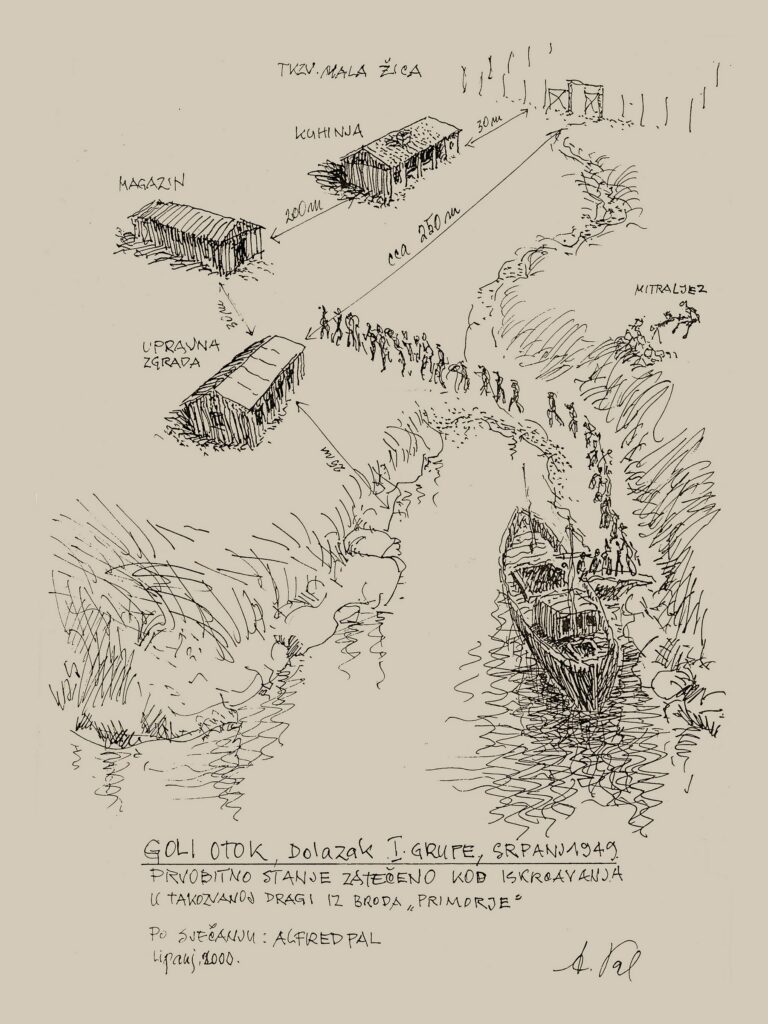
The first camp buildings were prepared before the arrival of the first political detainees in July 1949. The work was carried out by prisoners brought from mainland penitentiaries, who had no connection with the Cominform.
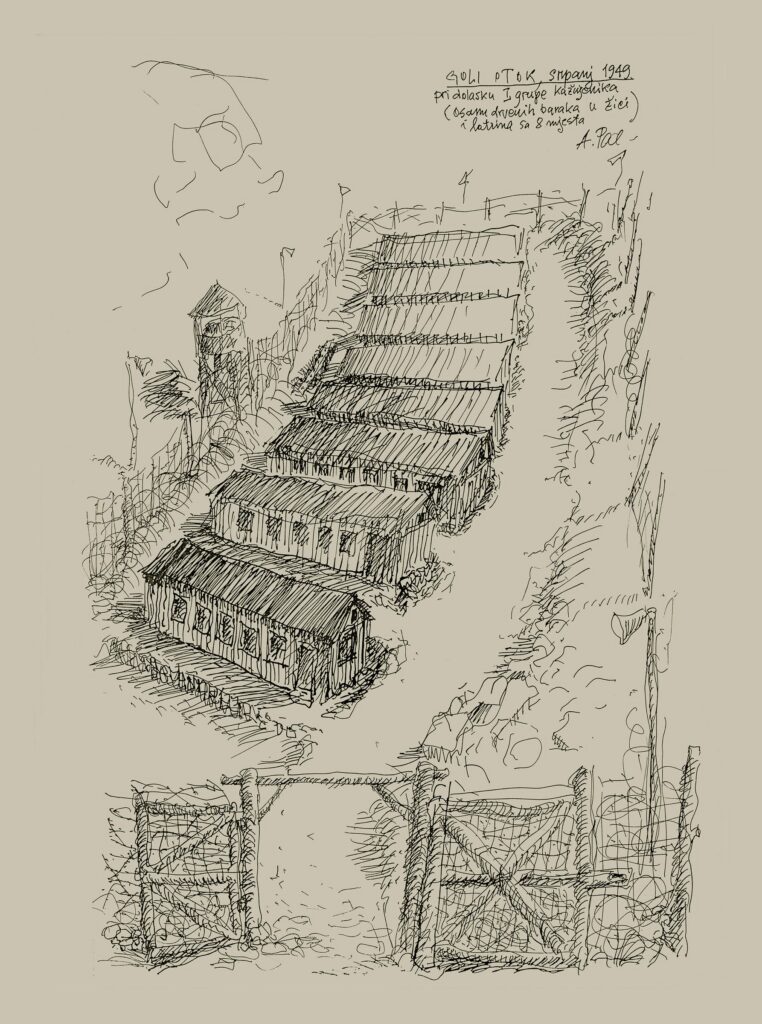
In the first phase, temporary accommodation and service buildings were erected. A fence, guard posts and lighting were installed, and basic paths and passageways were laid out within the camp. After the work was finished these prisoners were returned to their home institutions and never met the arriving IB-ists (“ibeovci”).
Early layout and expansion of the system
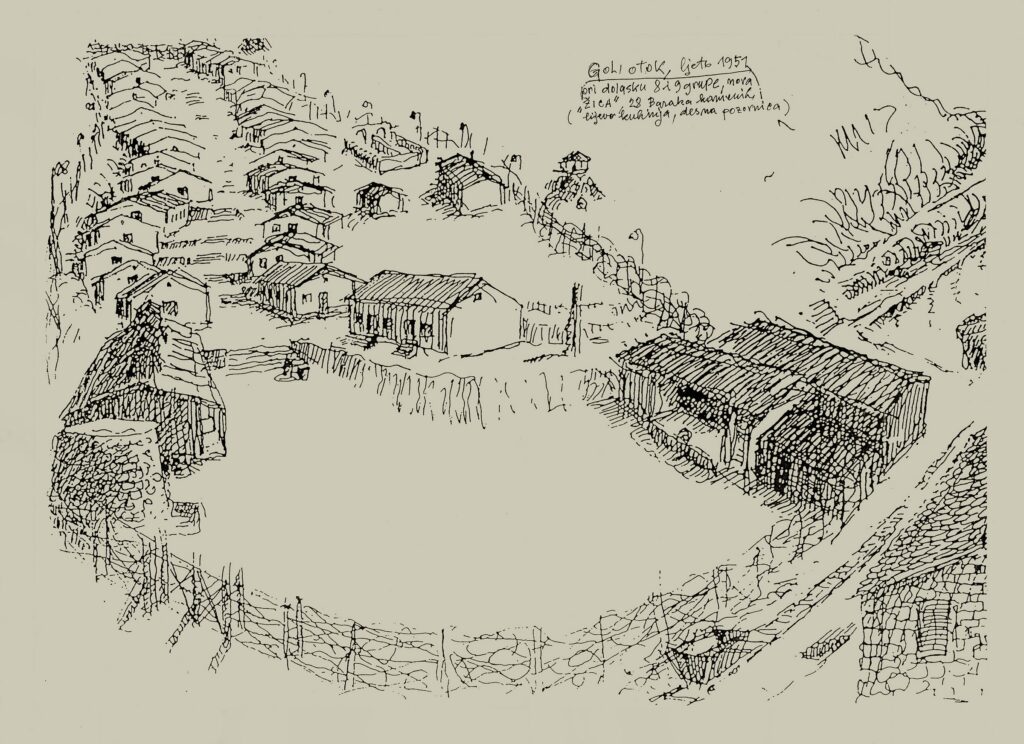
The operational centre was located beside the main cove for landing, supply and traffic control. As the number of detainees grew, the complex expanded towards the interior, with separate zones: administrative, residential, work and punishment.
From the outset the layout was designed so that everything could be easily monitored: with many vantage points overlooking the surroundings and clearly defined routes of movement that made escape difficult and reduced the possibility of spontaneous contact.
Drawings of the camp from the Association’s archive
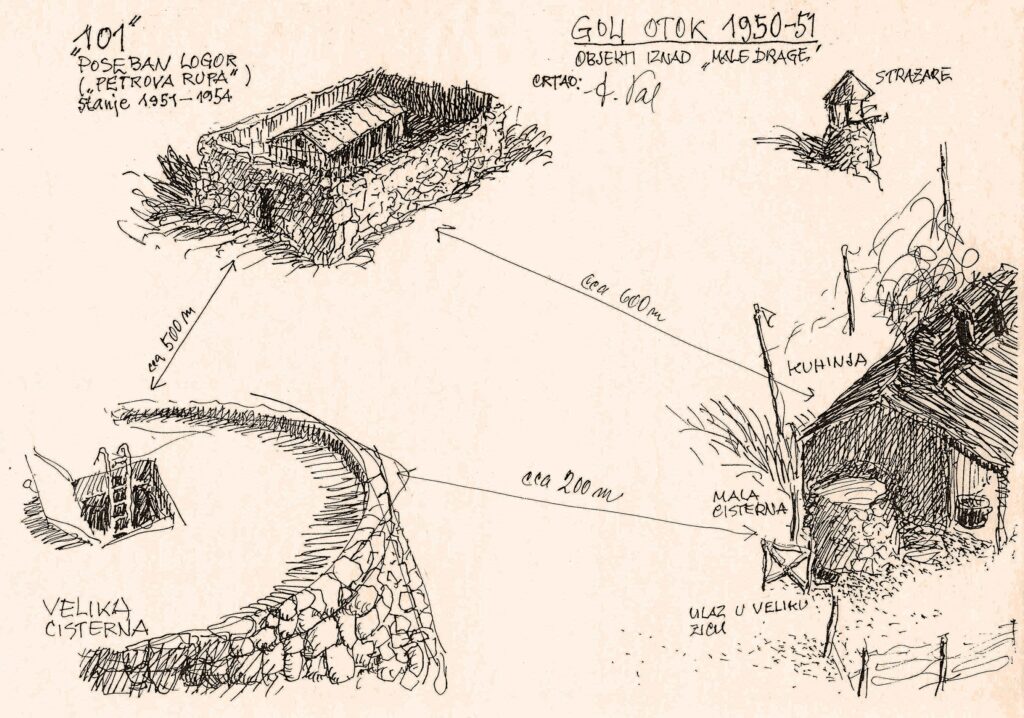
“Peter’s Hole” as the most isolated zone
In the interior of the island there is a pit known as “Peter’s Hole” (Petrova rupa). Former senior KPJKPJCommunist Party of Yugoslavia (Komunistička partija Jugoslavije). cadres who had been convicted for agreeing with the Cominform ResolutionCominform ResolutionThe 1948 political decision of the Cominform accusing Yugoslavia of deviating from the Soviet model of socialism, which led to the break with the USSR and the beginning of political persecution within the country. were held there. Because of its isolated position and controlled approaches it was turned into the strictest punishment zone, with a level of isolation greater than standard camp surveillance. More in the chapter The Secret Camp Within the Camp.
The role of the actors and the management framework
The political decision was secured by the leadership of the state and the Party. Operational management was the responsibility of the security structures (the UDBA) at federal and republic level, together with field work and officers charged with establishing the regime on site.
The site was chosen and shaped to allow maximum surveillance, minimum visibility and uninterrupted logistical supply.
Although testimonies may differ in detail, the sources agree on the essentials.
Glossary
- Informbiro
- Colloquial name for the Cominform – an international organisation of communist parties founded in 1947 for political coordination under the leadership of the USSR.
- UDBA
- State Security Administration (Uprava državne bezbednosti) – the Yugoslav secret political police responsible for the surveillance and persecution of real or alleged opponents of the regime.
- KPJ
- Communist Party of Yugoslavia (Komunistička partija Jugoslavije).
- Cominform Resolution
- The 1948 political decision of the Cominform accusing Yugoslavia of deviating from the Soviet model of socialism, which led to the break with the USSR and the beginning of political persecution within the country.