

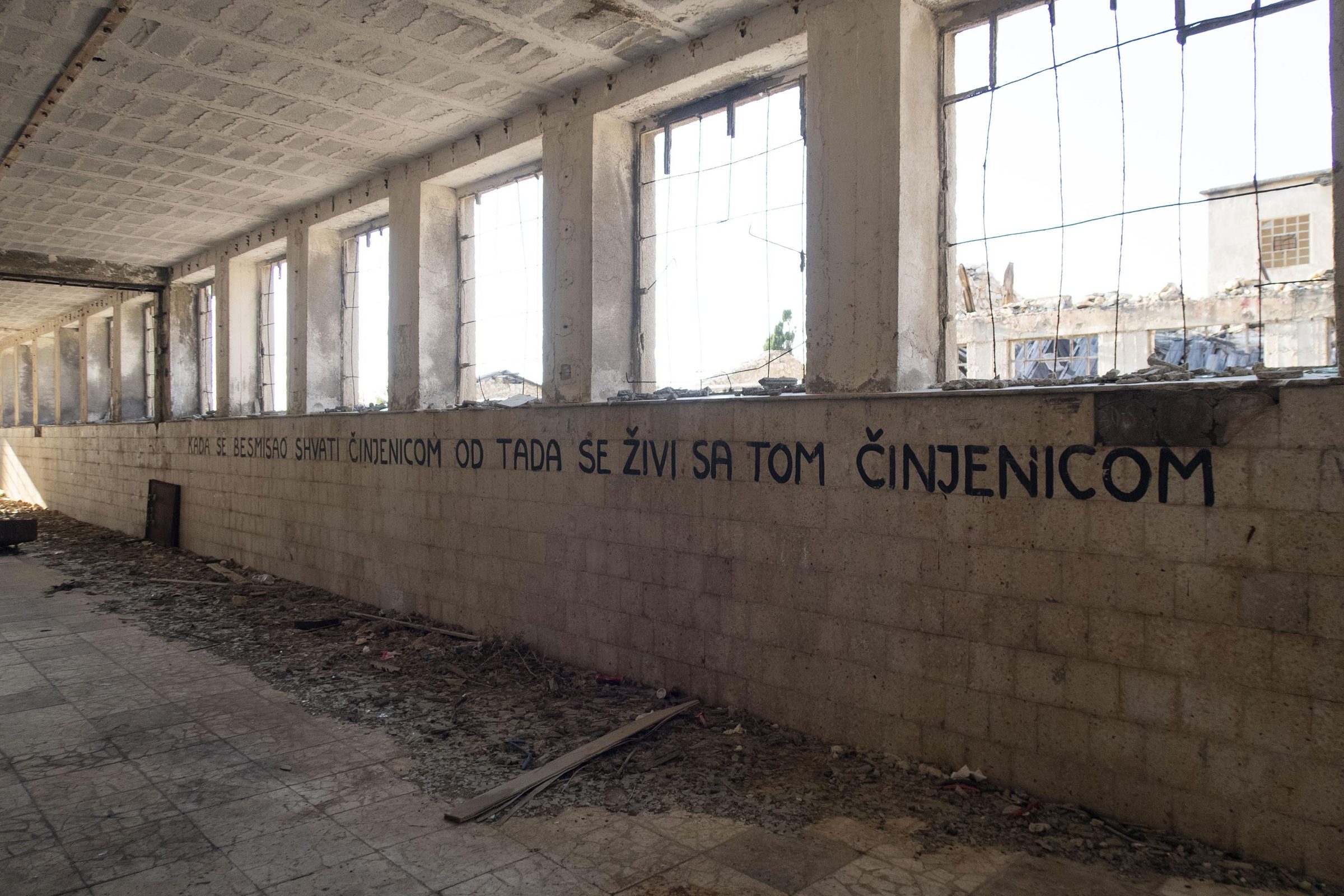
A legal assessment of Goli otok requires one important distinction: the detainees were not all punished in the same way. There were two basic forms of sentencing and deprivation of liberty.
1. Administrative punishment
Most of the prisoners were sent to Goli otok by administrative means, by decisions of the security apparatus, without a regular court judgment and without an effective legal remedy.
In these cases the key problem lies not only in the repressiveness of the system, but in the absence of basic legal guarantees:
- deprivation of liberty was decided not by a court but by the UDBAUDBAState Security Administration (Uprava državne bezbednosti) – the Yugoslav secret political police responsible for the surveillance and persecution of real or alleged opponents of the regime.
- there was no real possibility of a defence
- there was no effective legal remedyLegal remedyA prescribed means (e.g. an appeal or a lawsuit) by which a review and the amendment or annulment of a decision of a competent authority is sought.
- in a great many cases the regime operated secretly and beyond public scrutiny
For this reason, administrative committal to Goli otok was seriously at odds with the principles of legality, legal certainty and judicial protection.
2. Trial before a military court
Another group of detainees, particularly among military cadres and senior officers of the Yugoslav Army (JNAJNAYugoslav People’s Army (Jugoslavenska narodna armija) – the official name of the Yugoslav armed forces.), were formally tried before military courts.
This means that in these cases there was a legal form of trial, but that in itself does not mean the proceedings were lawful or fair. Testimonies and archival material indicate that many such trials bore the hallmarks of politically directed or fabricated trials.
For this group of detainees the main legal question is not only whether a judgment existed, but:
- was the court truly independent?
- was the defence effective?
- were the charges supported by evidence?
- were the proceedings politically fabricated?
Two forms of punishment, two different legal problems
These two forms of repression should not be treated as legally equivalent. With administrative punishment the main problem is the absence of judicial protection. With trial before a military court the main problems are the lawfulness of the proceedings, the independence of the court and the real evidential basis.
In other words:
- administrative punishment means punishment without regular judicial oversight
- military trial means that a formal procedure existed, but with serious doubt as to its fairness
Administrative punishment of corrective labour as a means of political re-education
The Cominform Resolution was published on 28 June 1948. Shortly afterwards, on 18 October 1948, Article 6 of the Basic Law on Misdemeanours was amended, extending the penalty of socially useful, or corrective, labour.
It was precisely on the basis of this legal framework that a large number of people were arrested and punished by being sent to Goli otok. As Dragan Marković states:
“Others were punished with the administrative penalty of corrective labour, under the ‘Basic Law on Misdemeanours’ (passed in the ‘Official Gazette of the FNRJFNRJFederal People’s Republic of Yugoslavia (Federativna Narodna Republika Jugoslavija) – the official name of Yugoslavia from 1946; in 1963 it was renamed the SFRJ (Socialist Federal Republic of Yugoslavia).’, No. 107 of 17 December 1947) and the amendments to that law (in the ‘Off. Gaz. FNRJ’, No. 87 of 18 October 1948). Art. 1 of that law reads: ‘Misdemeanours are violations of the legal order established by regulations of the state bodies of the FNRJ and of the People’s RepublicsPeople’s RepublicsThe republics of the Yugoslav federation of the time: Croatia, Slovenia, Bosnia and Herzegovina, Serbia, Montenegro and Macedonia. Serbia included the Autonomous Province of Vojvodina and the Autonomous Region of Kosovo and Metohija (later a province)., for which, owing to their negligible social danger, an admin. penalty is prescribed.’ Art. 6 of that law sets the level of the administrative penalty: ‘corrective labour’.”
Dragan Marković, 1990, p. 453
This very wording reveals the legal paradox of the system: an institution formally intended for acts of “negligible social danger” was turned, in political practice, into a mechanism for the removal, isolation and re-education of real or alleged opponents of the regime.
As a result, the administrative penalty of corrective labour lost the character of an ordinary misdemeanour sanction and became an instrument of political repression under the control of the security apparatus.
The constitutional minimum: what the system of the time had to guarantee
The constitutional framework of the 1946 FNRJ was based on at least three requirements when someone is deprived of liberty:
Legality
- There must be a clear legal basis.
Publicity
- Rules must be publicly promulgated before they are applied.
Judicial oversight
- There must be a court decision or at least effective legal oversight, with the possibility of a defence and a legal remedy.
Deprivation of liberty was decided by the security apparatus, not by a court. Detainees had no real access to their file, to defence counsel or to an effective appeal.
The problem in international law: what was already contentious at the time
Goli otok was also contentious from the standpoint of international law. The relevant documents were the Charter of the United Nations, which Yugoslavia ratified on 19 October 1945, ILO Convention No. 29ILO Convention No. 29The International Labour Organization’s Convention on Forced Labour. Yugoslavia ratified it on 4 March 1933 (as the Kingdom of Yugoslavia), and international obligations as a rule continue in later forms of the state, including communist Yugoslavia. on forced labour, which Yugoslavia ratified on 4 March 1933, and the four Geneva Conventions of 1949, which Yugoslavia ratified on 21 April 1950. Secret internment without a court decision, forced labour without a judgment and inhumane treatment of detainees were therefore hard to reconcile with the standards these documents had already set.
Three key legal questions
When Goli otok is considered from a legal perspective, three fundamental questions arise:
- Was there a prior and publicly promulgated legal basis for a special regime of internment and forced labour?
- Was there judicial oversight and an effective legal remedy for persons deprived of their liberty?
- Was such practice compatible with the minimum international standards of protection that the state had already accepted at the time?
Administrative committal to Goli otok and the forced labour associated with it hardly pass any of the three tests. In the case of formal military proceedings, the problem lies not only in the existence of a procedure, but in whether the trial was truly fair and whether the charges were actually proven.
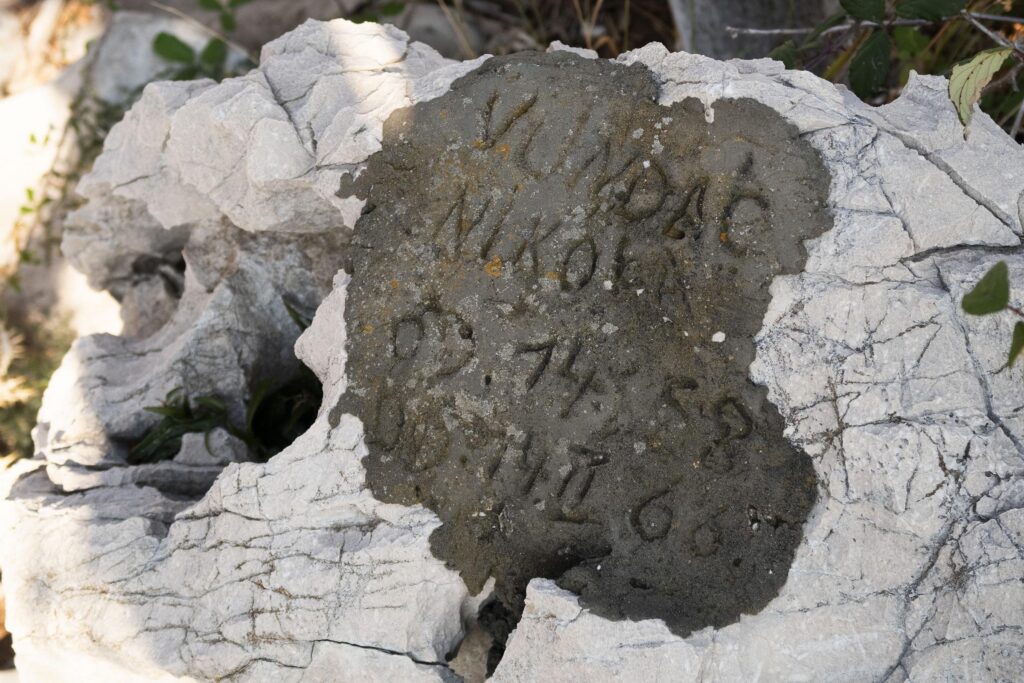
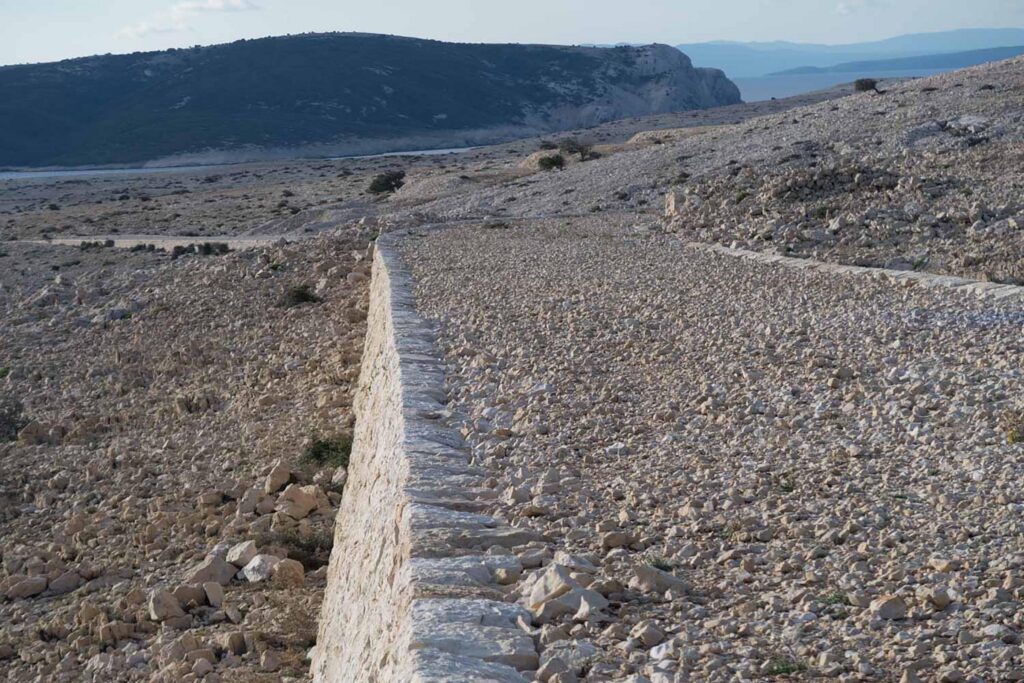
Photographs
Glossary
- UDBA
- State Security Administration (Uprava državne bezbednosti) – the Yugoslav secret political police responsible for the surveillance and persecution of real or alleged opponents of the regime.
- Legal remedy
- A prescribed means (e.g. an appeal or a lawsuit) by which a review and the amendment or annulment of a decision of a competent authority is sought.
- JNA
- Yugoslav People’s Army (Jugoslavenska narodna armija) – the official name of the Yugoslav armed forces.
- FNRJ
- Federal People’s Republic of Yugoslavia (Federativna Narodna Republika Jugoslavija) – the official name of Yugoslavia from 1946; in 1963 it was renamed the SFRJ (Socialist Federal Republic of Yugoslavia).
- People’s Republics
- The republics of the Yugoslav federation of the time: Croatia, Slovenia, Bosnia and Herzegovina, Serbia, Montenegro and Macedonia. Serbia included the Autonomous Province of Vojvodina and the Autonomous Region of Kosovo and Metohija (later a province).
- ILO Convention No. 29
- The International Labour Organization’s Convention on Forced Labour. Yugoslavia ratified it on 4 March 1933 (as the Kingdom of Yugoslavia), and international obligations as a rule continue in later forms of the state, including communist Yugoslavia.